kevin@escapecommand:~/blog$ cat the-ops-instinct-finds-the-friction.md
The Ops Instinct Finds the Friction
The operations reflex is to spot the friction you have stopped noticing and smooth it out. That reflex used to stop at the edge of software. AI moved the edge, and now it reaches the physical things in your house.
7 min readI built a white noise machine. Not bought, built: a small board that synthesizes white, pink, and brown noise live on its own processor, plays into any speaker, takes voice commands, and answers to Home Assistant. No audio files, nothing streaming, so there is no loop seam to jolt you awake at 3am. I do not write firmware. I have never written a line of the code that runs on that class of chip. Claude wrote all of it.
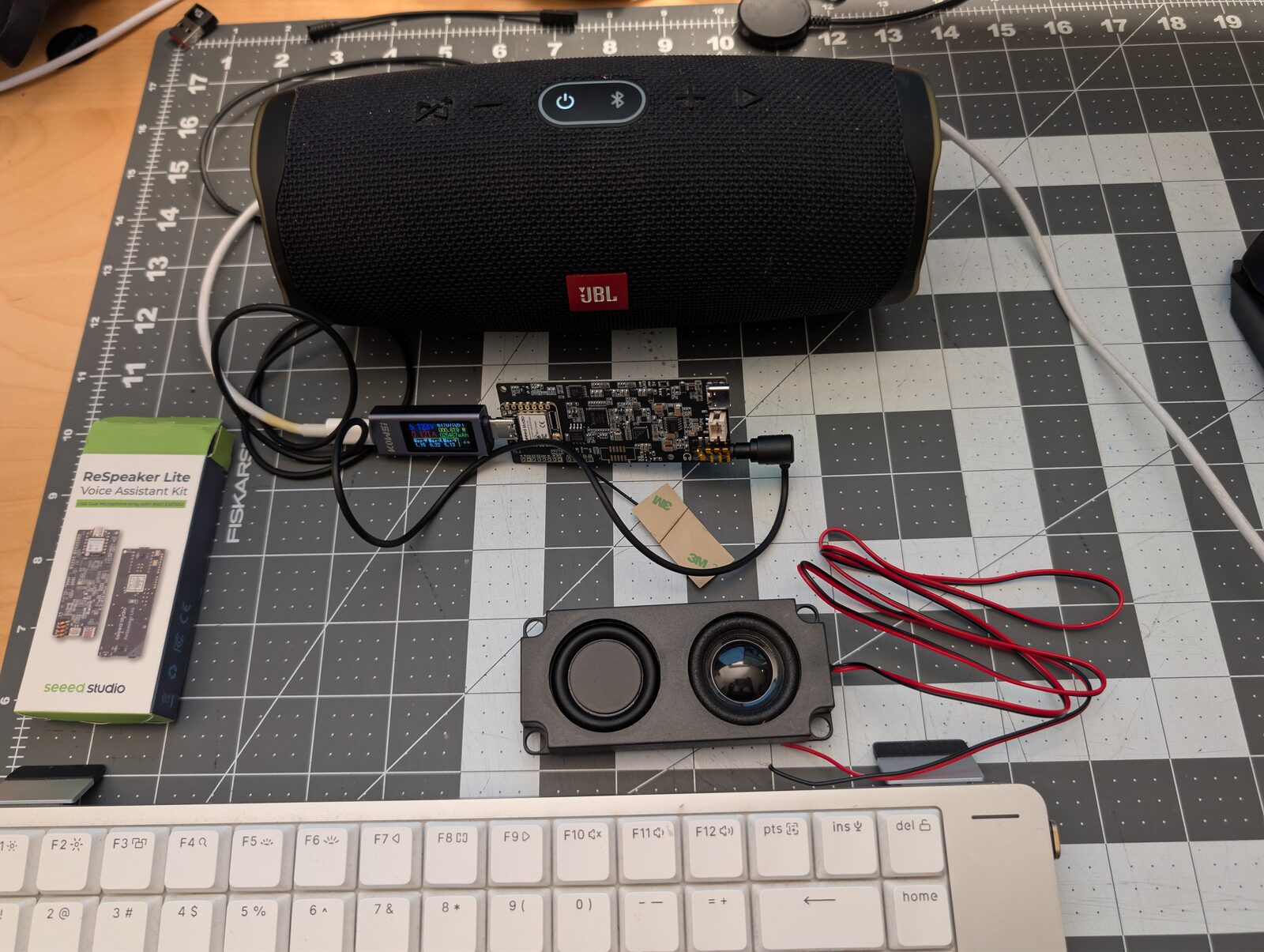
The reason I built it is petty and I will own it. I hated my last two white noise machines. The mechanical one wore out its bearings every five years and turned into a rattle machine. The electronic replacement had a non-standard USB-C port, a battery that could not survive a night, and a green status LED so bright I covered it with electrical tape. For an object meant to sit next to a sleeping person, the design choices were baffling. This is the kind of small daily friction most people learn to live with, because the alternative was becoming an electronics engineer. I lived with it for years too.
What changed is that I no longer had to live with it. The same instinct I bring to a business process, watch the thing you do every day, find where it grates, smooth it out, finally reached the bedside table.
The Edge Software Used to Stop At
Anyone who has spent time in operations has the reflex. You notice the report that takes forty minutes because someone is copying cells by hand. You notice the handoff that drops things because two teams use two systems. You cannot help it. You see a process and you see where it is bleeding time, and the itch to fix it is automatic.
For most of my career that reflex stopped hard at a boundary. If the friction lived in software or in a workflow, I had a shot at it. If it lived in a physical object, a thing in the room that worked badly, the reflex hit a wall. Fixing it meant electronics, firmware, a soldering iron, a body of knowledge I did not have and was not going to acquire for one annoying box. So the physical annoyances stayed annoyances. You tape over the LED and move on.
That boundary is where AI changed the texture of my life more than it changed my work. The work shift I have written about at length: building got cheap, so the person with the context can be the person who builds. The quieter shift is what happens when you point that same cheapness at the friction in your own day. The white noise machine needed real-time audio synthesis on a constrained chip, a forked driver to run the microphone and speaker at once, and a local voice pipeline. Every one of those was a closed door to me a year ago. Each became an evening. I described the machine I wanted at the level the decisions live at, and the thing got built.
It Was Not the First
Once the boundary moves, you start seeing through it everywhere.
Before the noise machine there were other house projects. An ESP32 sitting on the control bus of my mini-splits so Home Assistant can drive them. A low-power epaper panel by the door that tells me whether my tram is delayed before I leave, alongside the weather and the day’s calendar. None of these were assigned to me. None of them were worth the cost of learning their respective crafts from scratch. All of them were small, specific frictions I had quietly absorbed for years: a thermostat I could not automate, a tram that strands me behind a drawbridge with no warning, a sleep machine that kept failing me.
The pattern is the operations pattern, turned inward. Watch what you do every day. Notice where it grates. The new part is that “smooth it out” no longer screens out the physical world. The digital capability I always had now flows into the objects in the room. The white noise machine is the cleanest example because the friction was so concrete: I wanted noise with no loop seam, no battery, no light, tuned exactly how I like it, and now it exists and it is exactly that.
It Is Not Frictionless
I should be honest about the part the discount does not reach. The first builds of the machine were silent, and finding out why took me through the whole signal path even though I wrote none of it. The voice control took several rounds to stabilize, and a couple of those rounds I wasted chasing a failure I had created myself by leaving stale processes running. Building got cheap. Debugging the thing you built did not. The instinct gets you to a working machine; it does not get you there without a few bad evenings.
That is the toll, and it is real, but it is a toll on a road that used to be closed entirely. A few frustrating evenings to own a thing built exactly to my spec is a trade I will take every time over taping over someone else’s bad LED.
Same Muscle, New Surface
This is the part that ties back to why I do this at all. The thing I help teams with is operationalizing: taking the messy, manual, lived-with process and turning it into something that runs cleanly. The spreadsheet that outgrew itself, the workflow nobody owns, the report that should not take forty minutes. It is a way of seeing. You look at how a thing is done today and you see the version where the friction is gone.
The house projects are that exact muscle, pointed at my own life instead of a business. There is no difference in kind between noticing that a reconciliation process is bleeding an hour a day and noticing that my sleep tech has been quietly failing me for a decade. Same reflex. The only thing that used to separate them was that one lived in software, where I could act, and the other lived in a plastic box, where I could not. That separation is mostly gone now.
The invitation here, if there is one, is to look at the friction you have stopped noticing. Not the big projects. The small daily grates you have filed under “not mine to fix” because fixing them used to require a craft you do not have. A lot of those are now an evening of describing what you want clearly to a tool that will build it. The skill was never the building. It was noticing the friction in the first place, and being specific about what “smooth” looks like. That part was always yours.
The Throughline
The arc keeps landing on the same place from new directions. Building got cheap, so the bottleneck moved to deciding and describing. The skill that survives is holding the shape of the system well enough to direct the build. This piece is the domestic cut of it: when the cost of building falls far enough, the operations reflex stops being something you only get to use at work. It comes home. The friction you walk past every day, the physical annoyances you assumed were permanent, become things you can operationalize.
I sleep better now, in the literal sense. The machine next to my bed is one I designed, and there is no green light, no rattle, no seam. It is a small thing. But it is the kind of small thing I spent years deciding was not worth fixing, and the fact that it was finally worth fixing is the whole shift in one object.
If you want help turning the friction your team lives with every day into something that runs cleanly, at work or in the systems around it, reach out at hello@escapecommand.com.